
Vstřebávání kolagenu: Jak tělo používá kolagen pro klouby, kůži a vlasy
When you take collagen, it’s not enough to just swallow it — your body needs to vstřebávání kolagenu, proces, při kterém se kolagen rozloží na malé peptidy, které tělo dokáže využít. Also known as absorpcí kolagenu, it is the key to whether your joints, skin, or hair actually benefit from what you take. Many people buy collagen supplements and wonder why they don’t see results — the answer is rarely in the dose, but in the absorption.
Collagen doesn’t arrive at your knees or face as a big protein molecule. It gets broken down in the stomach and small intestine into smaller chains called peptides. These peptides then travel through your bloodstream and signal your own cells to produce more collagen — especially in areas that need repair. That’s why mořský kolagen, typ kolagenu získaný z rybích kůží a šupin, který má menší molekuly a lépe vstřebává tělem often works better than bovine collagen. Its smaller size means it slips into your system faster and reaches your joints and skin more efficiently.
But absorption doesn’t happen in a vacuum. It needs help. Vitamin C is the unsung hero here — without it, your body can’t turn those peptides into new collagen fibers. That’s why many effective supplements combine collagen with vitamin C, zinc, or hyaluronic acid. Even something as simple as taking your collagen with a glass of orange juice can make a difference. And timing matters too — taking it on an empty stomach or right before bed gives your body the best chance to use it while you rest and repair.
And it’s not just about joints. Your skin is 70% collagen. When absorption is poor, you get dryness, fine lines, and less elasticity — not because you’re aging, but because your body isn’t getting the raw materials it needs to rebuild. The same goes for your hair. Hair follicles rely on collagen to stay anchored and nourished. If your body can’t absorb it properly, your strands become brittle and thin, even if you’re using expensive serums.
There’s also a big difference between synthetic supplements and food-based collagen. Bone broth, fish skin, and even chicken feet contain natural collagen that your body recognizes and uses more easily. But if you’re not eating these regularly, a high-quality supplement with proven absorption rates is your next best option. Look for hydrolyzed collagen peptides — that’s the technical term for the broken-down form that actually works.
And don’t forget the gut. If your intestines are inflamed or your microbiome is out of balance, even the best collagen won’t be absorbed. That’s why people who take probiotics often see better results with collagen — a healthy gut lining is the first gatekeeper for absorption. If you’ve been taking collagen for months with no change, check your digestion first.
So when you hear someone say, ‘I take collagen and it didn’t work,’ they’re probably right — but not for the reason they think. It’s not that collagen doesn’t work. It’s that their body never got the chance to use it. The real magic isn’t in the powder or capsule — it’s in how well your body can turn it into something useful.
Below, you’ll find real, practical guides on exactly how to get your body to use collagen — whether you’re trying to ease joint pain, reduce wrinkles, or stop your hair from falling out. No fluff. Just what works.
Jak se nejlépe vstřebává kolagen pro klouby: pravda o doplňcích a potravinách

Zjistěte, jak správně brát kolagen pro klouby, aby skutečně pomohl. Víte, který typ je nejúčinnější, jak ho vstřebat a co mu dělá škodu? Pravda o doplňcích a potravinách.
- led, 15 2026
- 0 Komentáře
Který kolagen se nejlépe vstřebává? Nejlepší typy pro klouby a jak ho vybrat
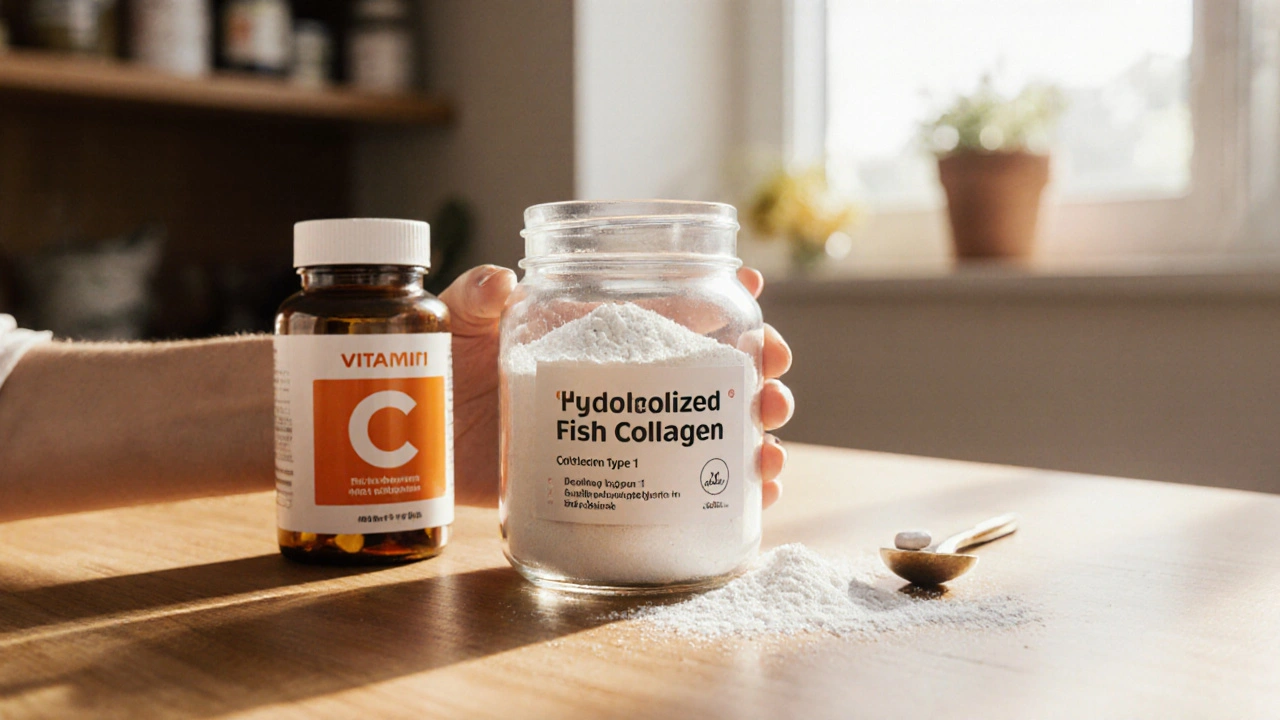
Zjistěte, který kolagen se nejlépe vstřebává pro klouby - hydrolyzovaný rybí typ 1 nebo nehydrolyzovaný typ 2. Naučte se, jak ho vybrat, kdy ho užívat a co se má vyhnout.
- lis, 26 2025
- 0 Komentáře